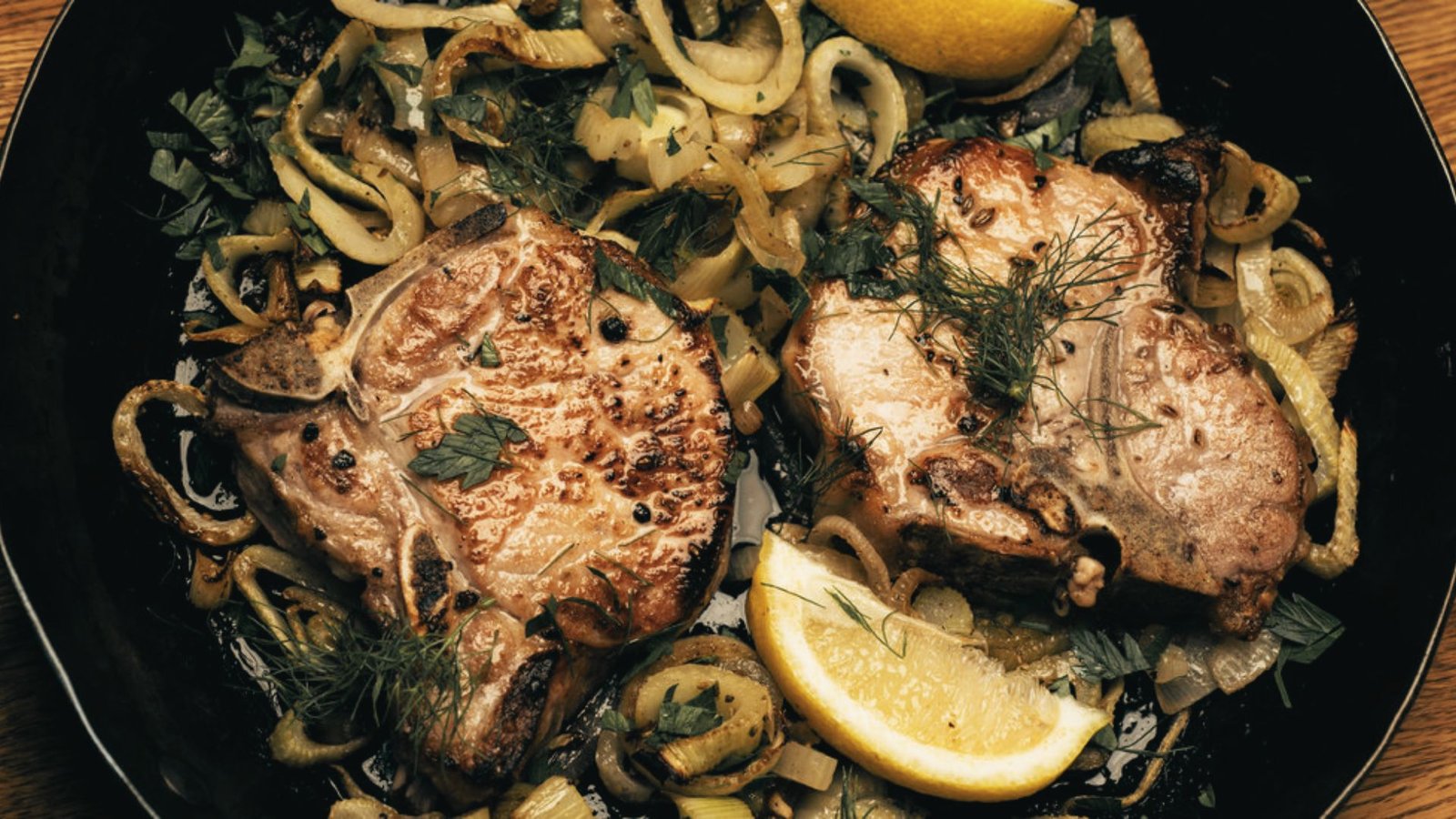
Dry, tough pork is one of the most common problems home cooks face.
This pork brine recipe with citrus and herbs fixes that completely.
It uses simple ingredients like fresh citrus, rosemary, thyme, and garlic to keep pork moist and full of flavor from the inside out.
Whether you are making pork chops, a roast, pulled pork, or a rack of pork, this brine works across all cuts.
I have used it dozens of times and it has never let me down.
What Makes This Pork Brine Recipe Work So Well

Salt is the foundation. It draws water out of the meat and pulls it back in along with all the flavors in the brine.
Citrus adds natural acid that softens tough muscle fibers and brightens the overall taste.
Fresh herbs like rosemary, thyme, and garlic slowly release their flavor into the meat during the soak.
Balancing salt, sugar, acid, and herbs is what makes the difference between bland pork and pork that is well-seasoned, tender, and juicy all the way through.
Ingredients for Pork Brine Recipe
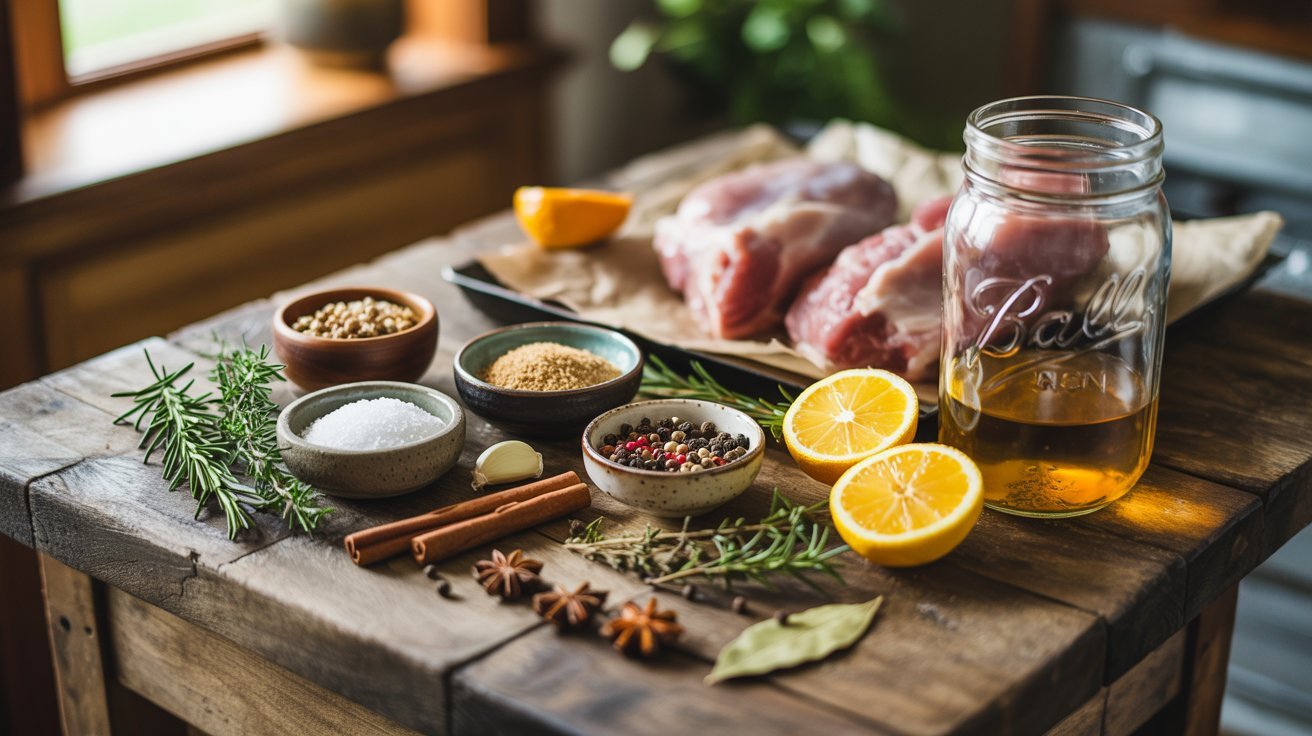
Here is everything that goes into a pork brine that actually works.
Basic Brine Foundation (Water, Salt, Sugar Ratio)
The base of any brine is water, kosher salt, and sugar. Start with 1 gallon of cold water, 1 cup of kosher salt, and half a cup of sugar. Always use kosher salt because table salt packs more tightly and can make the brine too salty.
Citrus Options (Orange, Lemon, Apple Cider Vinegar, Apple Juice)
Orange adds mild sweetness, lemon gives a sharper brightness, and apple cider vinegar brings tanginess that tenderizes tougher cuts. Apple juice works well for a softer, family-friendly flavor. You can use one or combine two for a more layered taste.
Fresh Herbs And Aromatics (Rosemary, Thyme, Garlic, Bay Leaf, Peppercorns)
Use two to three rosemary sprigs, a few thyme sprigs, four to six crushed garlic cloves, and two bay leaves per gallon. Add a tablespoon of whole peppercorns for gentle heat. Fresh herbs make a clear difference in the final flavor of the pork.
Sweeteners For Balance (Brown Sugar, Honey, Maple Syrup)
Brown sugar is the most common choice and pairs naturally with pork. Honey adds floral sweetness while maple syrup works especially well for smoked pork. Use a quarter to half a cup per gallon to avoid burning during cooking.
How to Make Pork Brine Recipe Step-by-Step
Follow these steps in order and your brine will come out right every time.
Step 1: Dissolve Salt And Sugar Properly
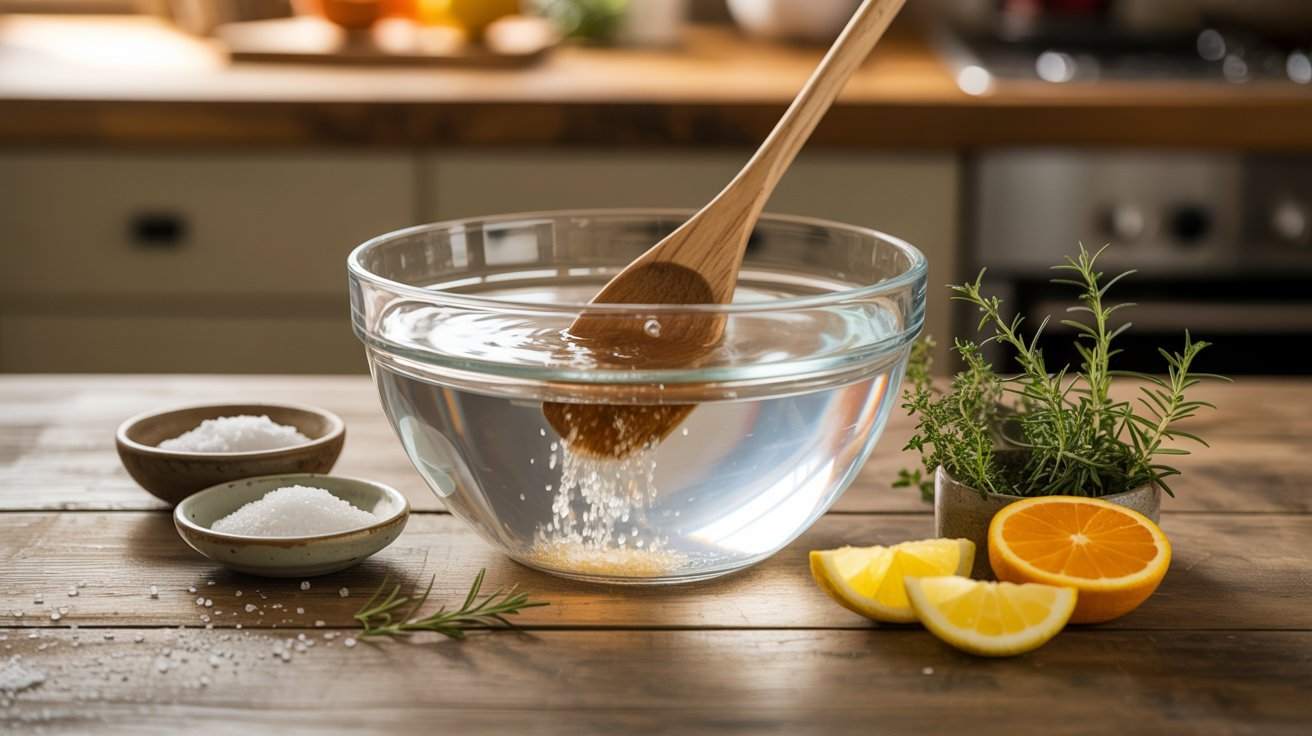
Start with one quart of hot water and stir in the salt and sugar until fully dissolved. Undissolved salt leads to uneven seasoning in the meat. Add the remaining cold water after to bring the total up to one gallon.
Step 2: Add Citrus, Herbs, And Aromatics
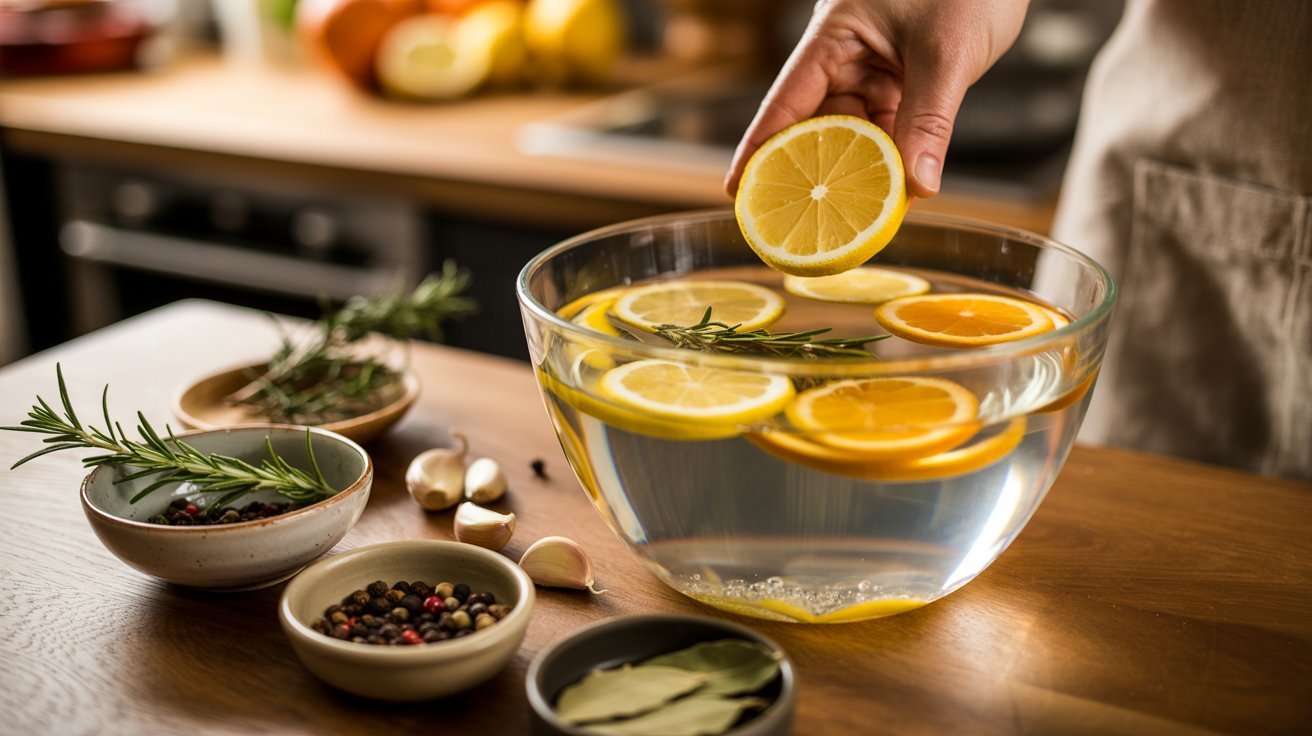
Add citrus juice and peels directly into the brine along with crushed garlic, herb sprigs, bay leaves, and peppercorns. Give everything a good stir and let it rest for 5 to 10 minutes. This short wait helps the flavors start blending before the pork goes in.
Step 3: Cool Brine Completely Before Use

Never place raw pork into warm brine. Warm brine can partially cook the surface and create unsafe conditions. Cool it at room temperature for 30 minutes, then refrigerate until completely cold.
Step 4: Submerge Pork Fully for Even Flavor Absorption
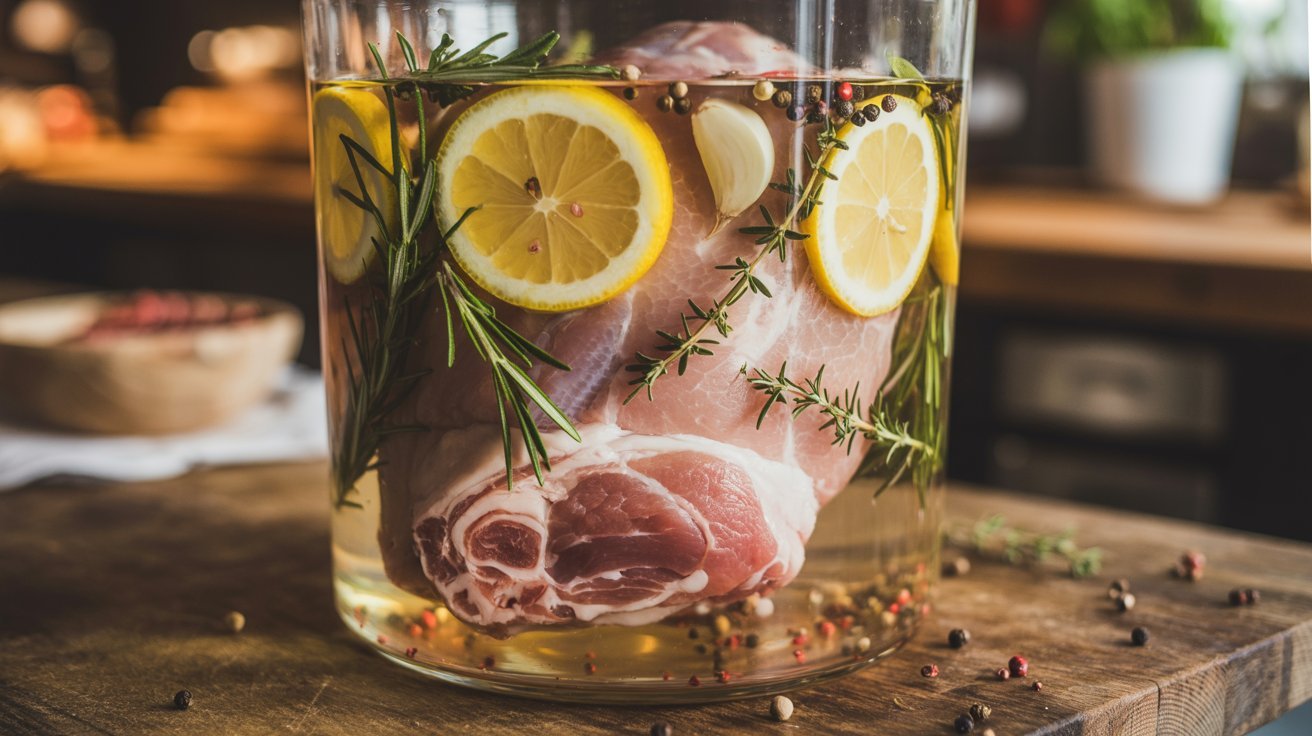
Place pork in a large bag or deep container and pour the cold brine over it. Make sure all sides are fully covered and use a plate or weight if the pork floats. Keep it in the refrigerator for the full recommended brining time.
Pork Brine Recipe Variations for Great Flavor
Pick the variation that fits your cut, your cooking method, and your taste.
Citrus Pork Brine Recipe (Lemon And Orange Freshness)
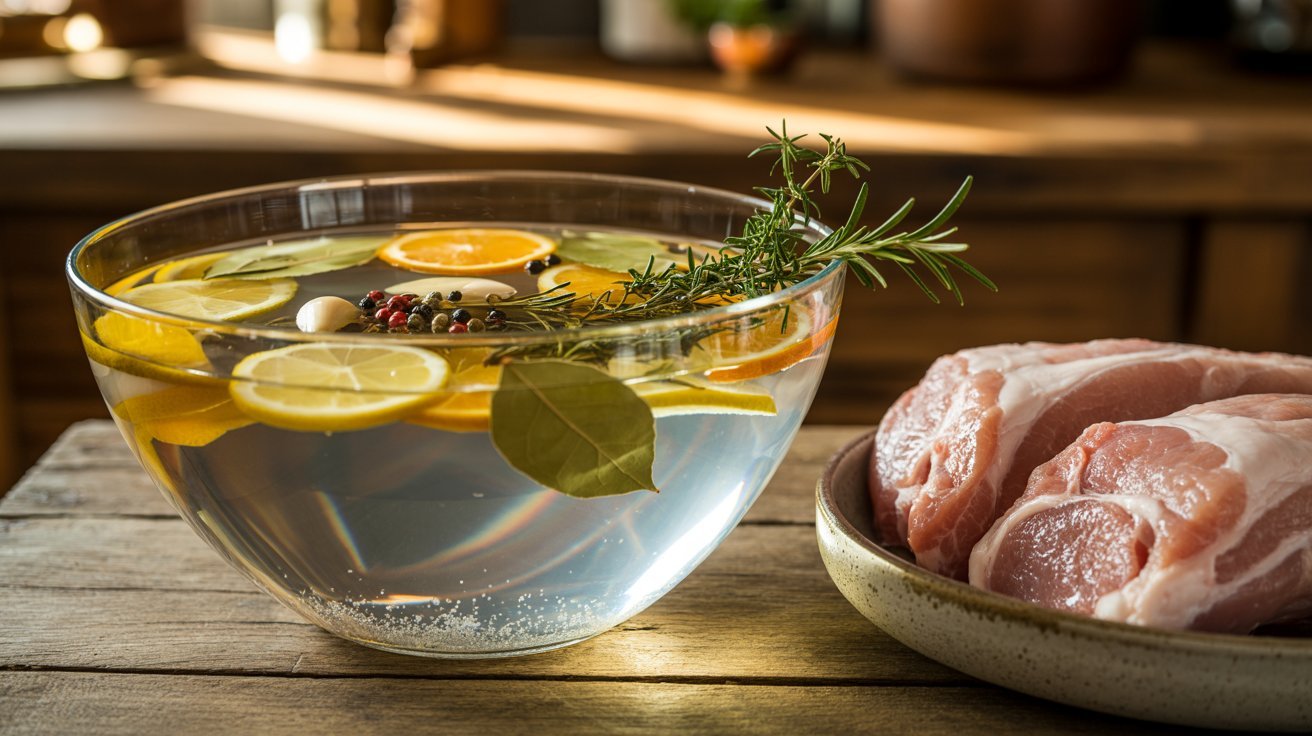
Use the juice and zest of one lemon and one orange per gallon, along with fresh thyme. This combination gives the pork a clean, bright flavor without overpowering the meat. It is a great starting point for anyone new to brining.
Apple Cider Vinegar Pork Brine Recipe (Tangy And Tenderizing)
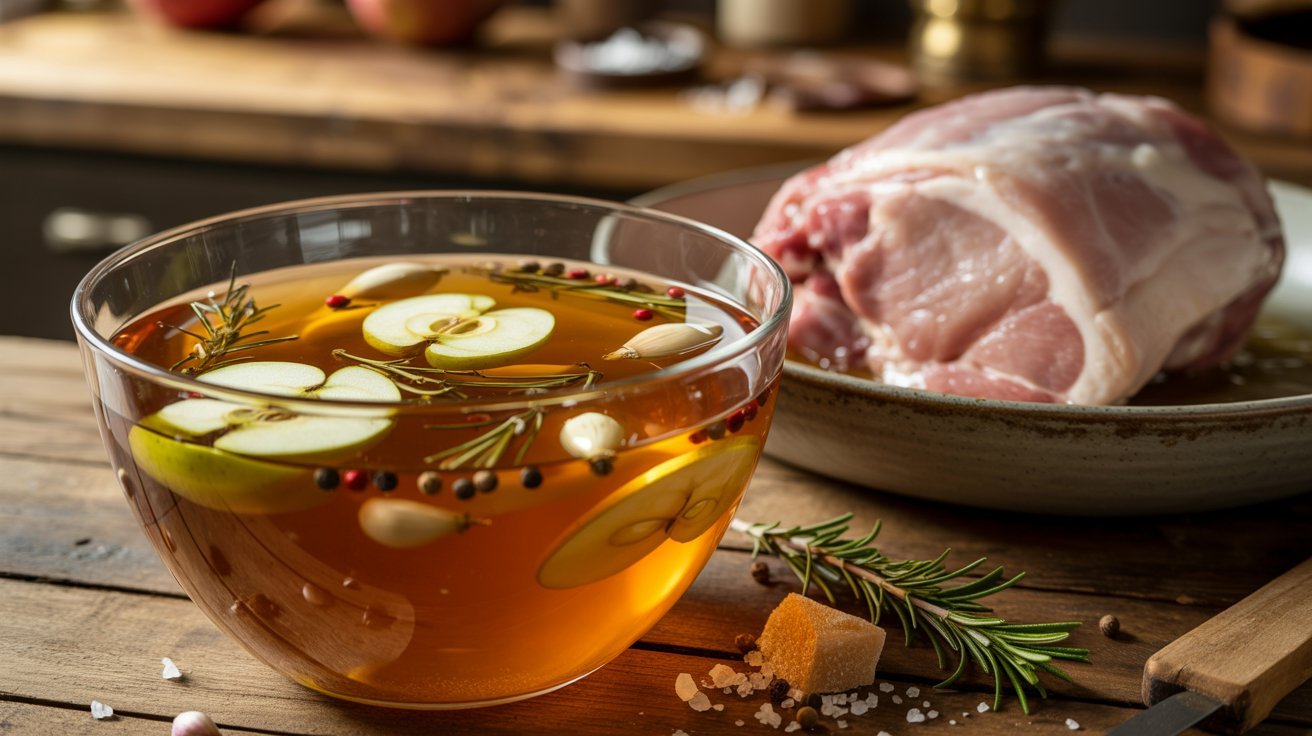
Use half a cup of apple cider vinegar per gallon and reduce the sugar slightly to keep things balanced. The acid works on muscle fibers and makes the pork easier to shred after a long cook. This version works best for pork shoulder and pulled pork.
Apple Cider Pork Brine Recipe (Sweet And Balanced Flavor)
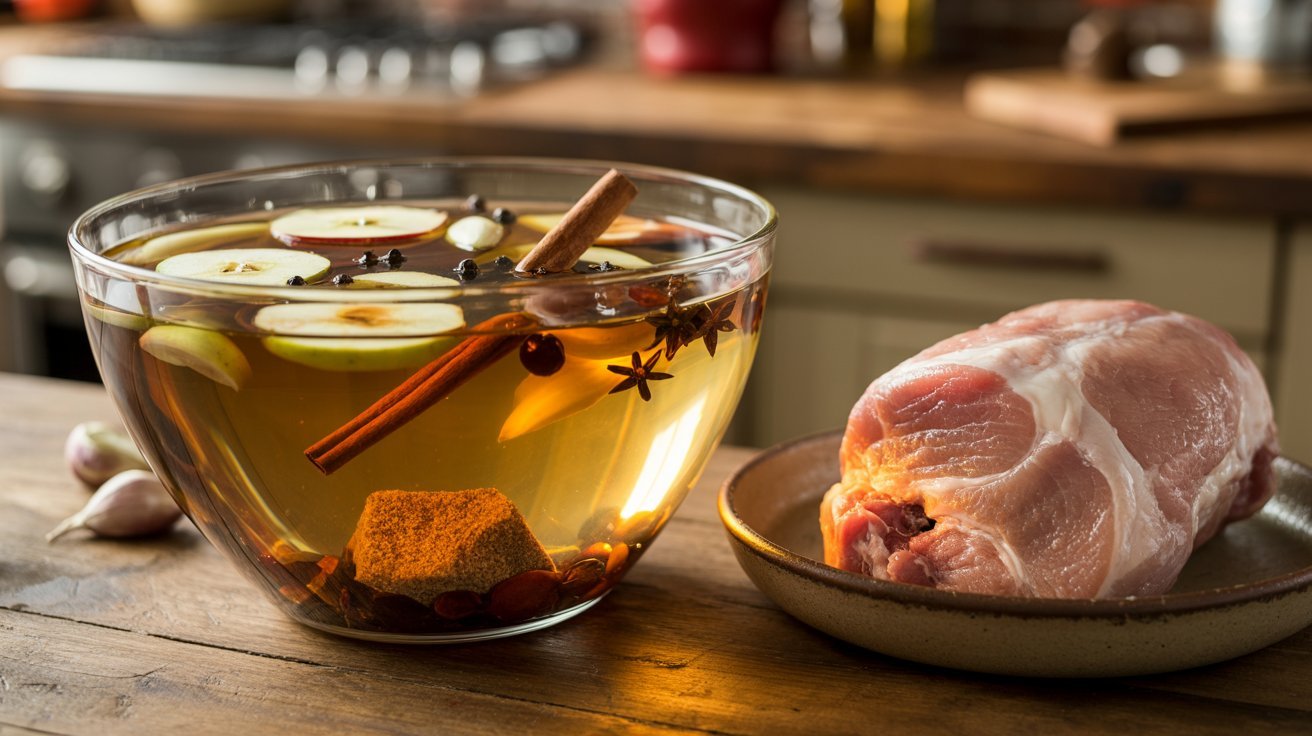
Replace one cup of water with one cup of fresh apple cider and add a pinch of cinnamon and a few whole cloves. This gives the pork a gentle, warm sweetness that works well in fall and winter. It pairs nicely with pork loin and oven-roasted cuts.
BBQ Pork Brine Recipe (Smoky-Sweet Depth)
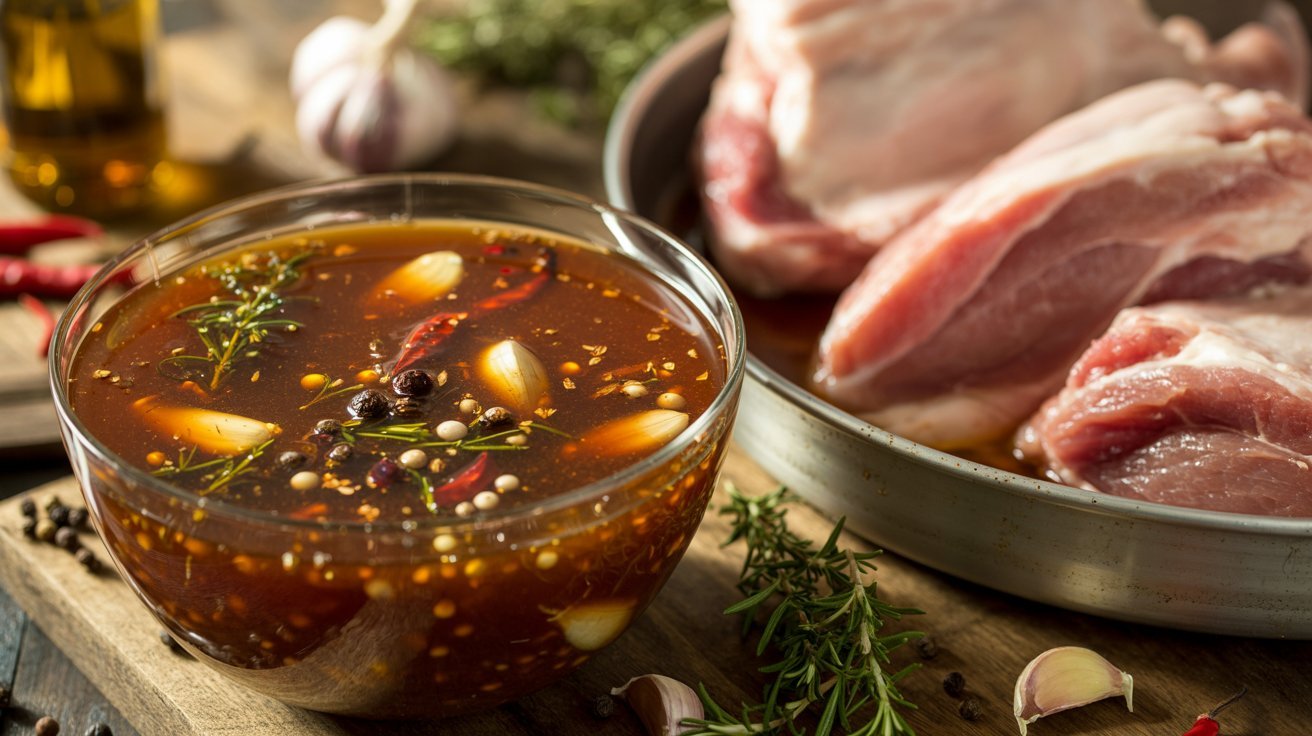
Add two tablespoons of smoked paprika, one tablespoon of Worcestershire sauce, dried chipotle flakes, and plenty of crushed garlic to your base brine. Use brown sugar as the sweetener for a deep, smoky flavor. This version is built for the grill and smoker.
Herb-Forward Pork Brine Recipe (Rosemary, Thyme, Garlic)
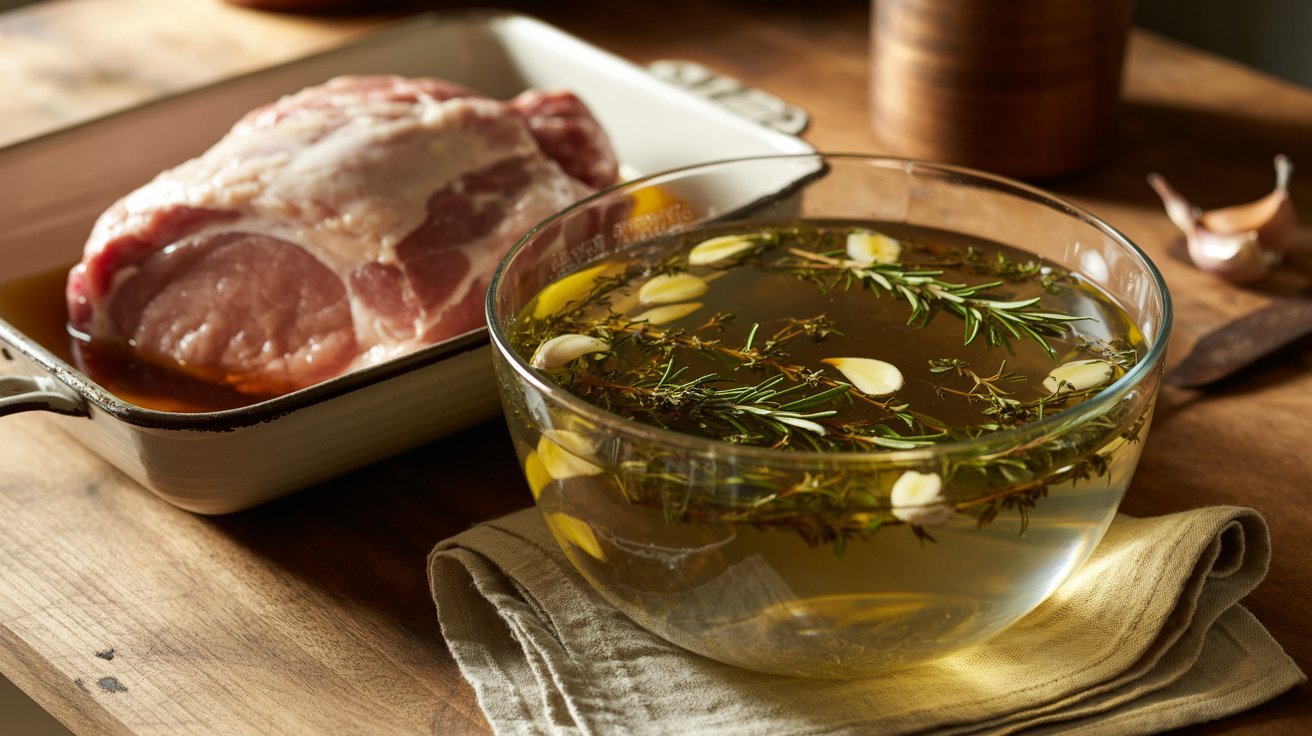
Use three rosemary sprigs, five thyme sprigs, six crushed garlic cloves, and two bay leaves per gallon. Keep the citrus light or skip it completely so the herbs stay at the front of the flavor. This brine is especially good for pork roast and rack of pork.
Best Pork Brine Recipe for Smoking, Grilling and Roasting
The way you cook your pork should shape the brine you use before it.
Pork Brine Recipe for Smoking (BBQ Flavor and Moisture Retention)
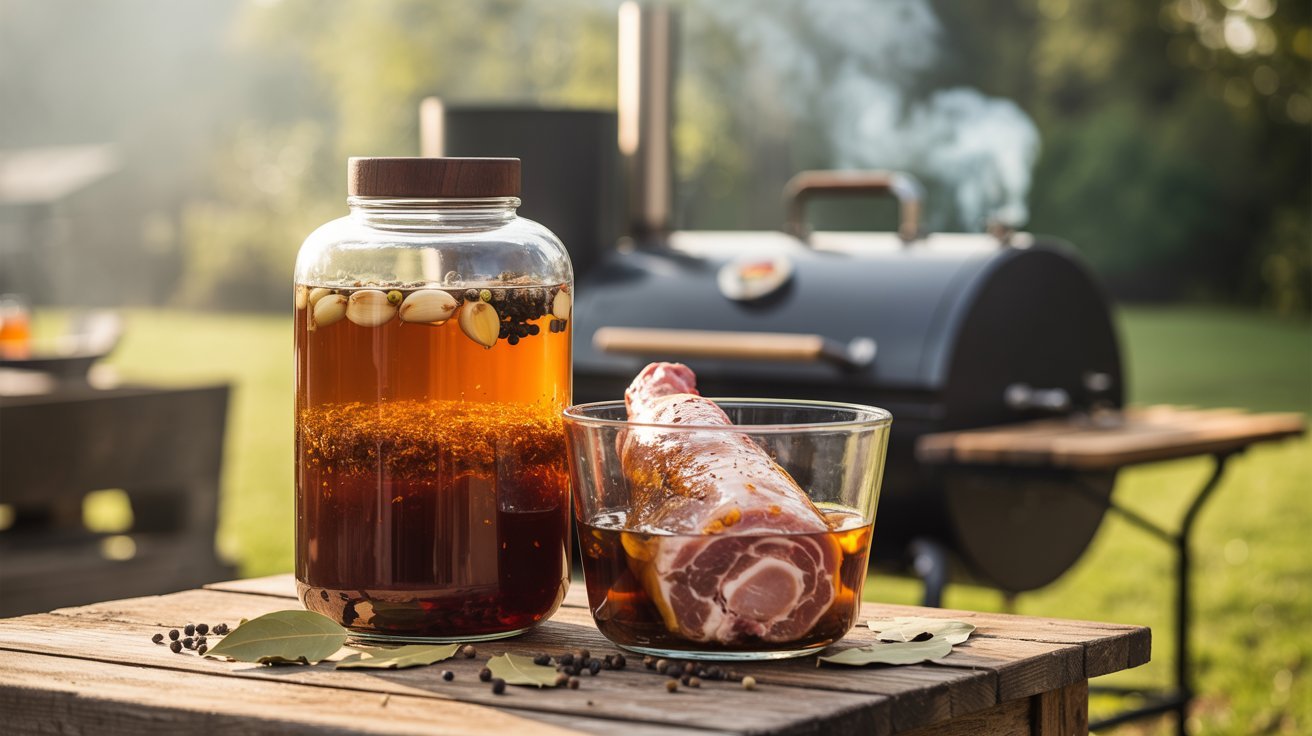
Smoking uses low heat over many hours, which pulls a lot of moisture out of the meat.
Brining first with brown sugar, smoked paprika, garlic, and Worcestershire sauce keeps the pork juicy throughout the entire cook.
Brine pork shoulder for 12 to 24 hours before it goes into the smoker.
Pork Brine Recipe for Grilling (Quick Juicy Results)
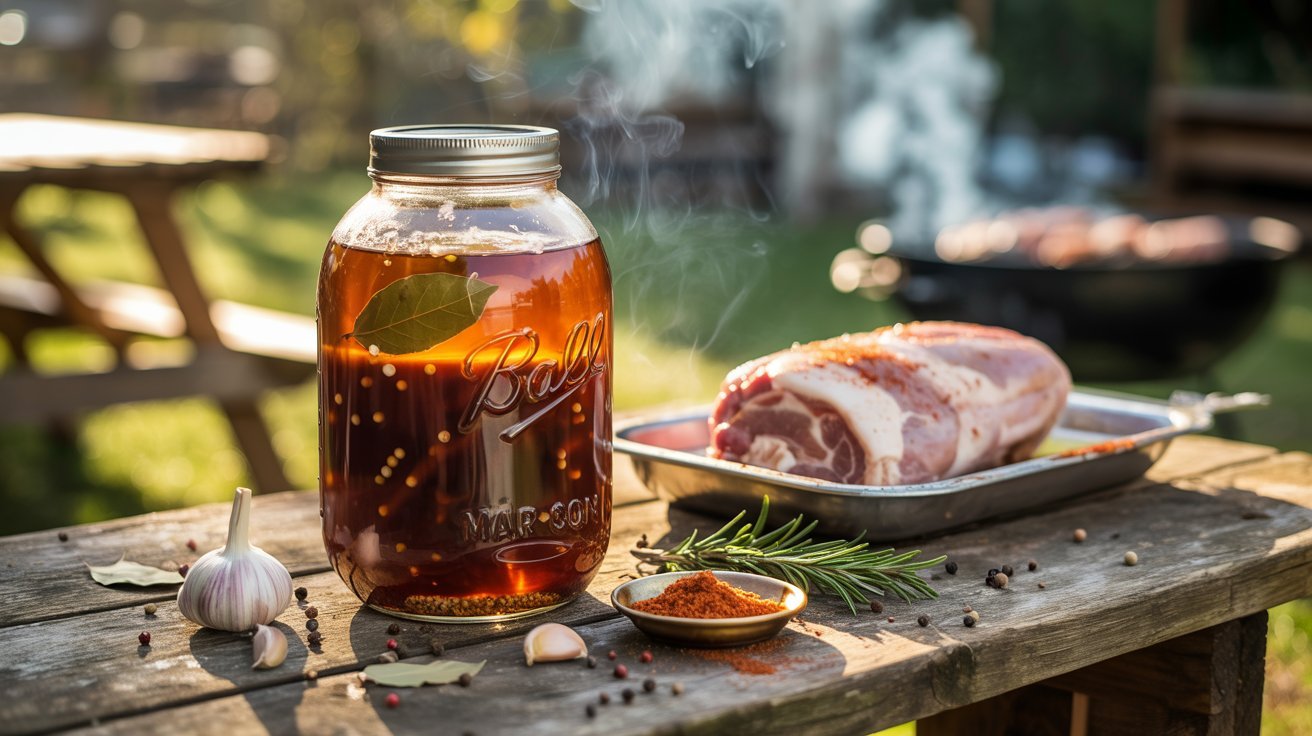
Pork chops only need 2 to 4 hours in a citrus and herb brine before hitting the grill. Always pat the meat completely dry before placing it on the grates so it sears properly. A good sear locks in the moisture the brine puts into the meat.
Simple Pork Brine Recipe for Roasting (Oven-Friendly Method)
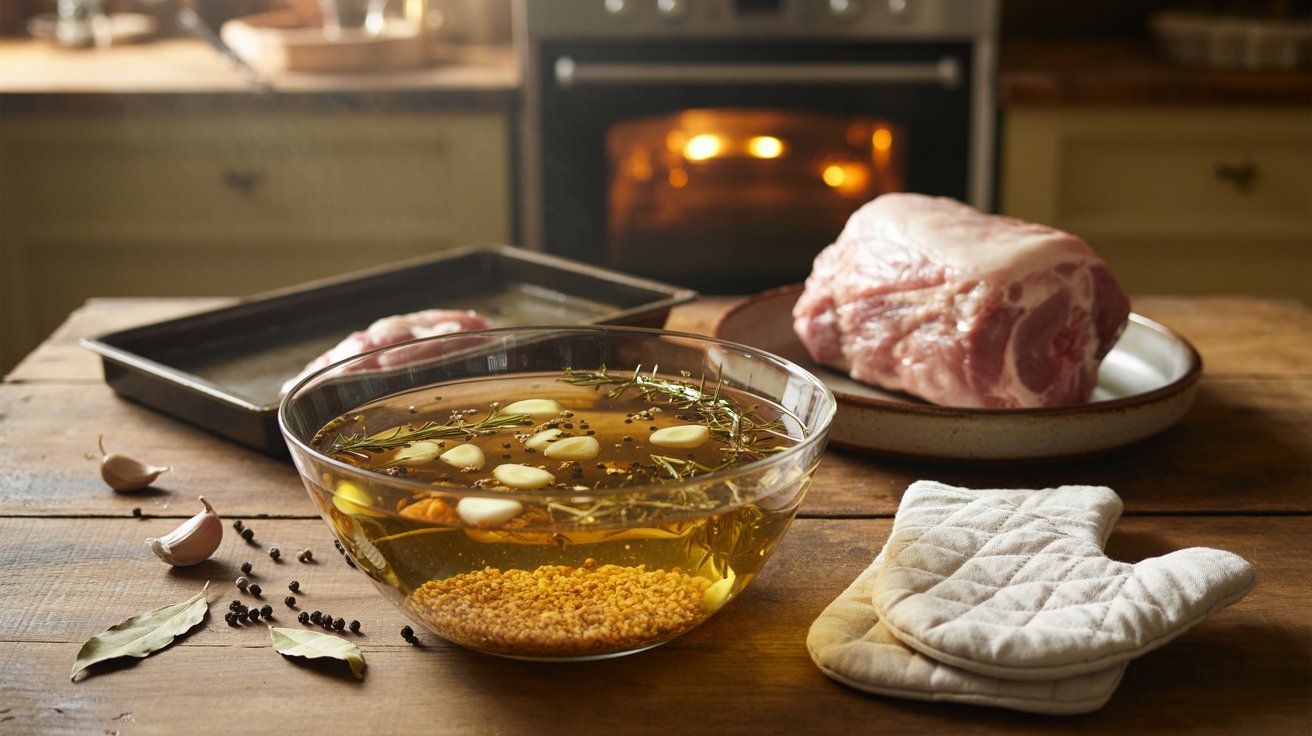
Brine pork roast or loin for 8 to 12 hours using a simple salt, sugar, orange juice, rosemary, and garlic brine.
After brining, rinse, pat dry, and let it rest uncovered in the refrigerator for one hour before roasting. Roast at 375°F to an internal temperature of 145°F, then rest for 10 minutes before slicing.
Expert Tips for Better Brining
- Always cool the brine completely before adding pork
- Never brine pork at room temperature for any extended period
- Pat pork completely dry before cooking for a proper sear
- Do not exceed the recommended brining time for each cut
- Make sure the pork is fully submerged on all sides throughout the brine
Conclusion
This pork brine recipe genuinely changed the way I cook pork at home.
I used to end up with dry chops and bland roasts that no amount of sauce could fix.
Once I started brining with citrus and herbs, that problem went away completely. A good brine does not require expensive ingredients or hours of extra work.
A handful of simple things in the right ratio is all it takes. Try it this week and see the difference for yourself. Drop a comment below and share it with someone who loves to cook.
Frequently Asked Questions
What is the best pork brine recipe for beginners?
Start with water, kosher salt, brown sugar, and fresh garlic. This simple base works well on any cut and comes together in minutes.
Can I use apple cider vinegar in pork brine?
Yes, apple cider vinegar adds tanginess and helps tenderize the meat. Use half a cup per gallon and reduce the sugar slightly to keep the flavor balanced.
Do you rinse pork after brining?
Yes, rinsing removes excess salt from the surface of the meat. Pat it completely dry after rinsing so it browns properly during cooking.
Can you over-brine pork?
Yes, brining too long makes pork overly salty and changes the texture for the worse. Stay within the recommended time for each cut to avoid this.
What is the best brine for smoked pork?
A smoky-sweet brine with brown sugar, smoked paprika, garlic, and Worcestershire sauce works best. Brine for at least 12 hours before placing the pork in the smoker.